
By using our website, you agree to the use of cookies as described in our Cookie Policy
Offshore Fishing Charters in Broward County
Heading offshore isn’t just another day on the water. The moment you leave the coastline behind, everything changes. Bigger fish, unpredictable seas, and gear that takes a beating. Out here, you need a captain who knows the territory and a boat that’s built for the job. The open Atlantic off South Florida isn’t a place for uncertainty. With the right crew, you’re not chasing rumors. You’re targeting real fish in proven waters around Broward County.
Planning matters. Offshore trips aren’t quick jaunts; they’re serious runs that burn fuel and cover miles. Weather can shift, currents can turn, and the fish move fast. But when a sailfish rips line or a mahi lights up behind the boat, you see why anglers keep coming back. The captains who work these waters don’t just know the spots. They know how to read the ocean and adjust on the fly.
How We Target Productive Offshore Zones
When the bottom drops and the current starts to rip, that’s where the action begins. Some days, the best bite sits just a few miles out. Other days, it takes a longer run to find the right water. Either way, knowing where to fish isn’t luck. It’s experience built over hundreds of trips.
- The Edge: This is where shallow water meets the deep, creating current breaks that pull in bait and predators.
- Wrecks and Artificial Reefs: Sunken structures offshore that hold amberjack, grouper, and barracuda, especially when the current is moving.
- The Gulf Stream: A powerful offshore current that brings in pelagic species like sailfish and wahoo, especially during migration windows.
- Deep Drop Zones: Beyond 400 feet, these areas attract swordfish and tilefish feeding along the bottom.
- Floating Debris and Weed Lines: Mahi-mahi and tuna gather under cover, hunting bait that collects in the shade.
Every spot fishes differently as the seasons shift. Sometimes the bite is close, sometimes you need to push farther. Local captains track these changes, moving with the fish and adjusting tactics as needed. You’re not just booking a boat. You’re relying on someone who knows how to find the action, even when conditions change.
What We Catch Offshore
With each run offshore, the target list changes. Some days, the rods bend with kingfish or tuna. Other days, a sailfish jumps or a wahoo screams off with the bait. These fish don’t give up easy, and every hookup brings a new challenge.
- Sailfish: Known for speed and wild jumps, these are a top prize for anyone chasing big game offshore.
- Mahi-Mahi: Bright colors and aggressive strikes, often found in schools near weed lines or floating debris.
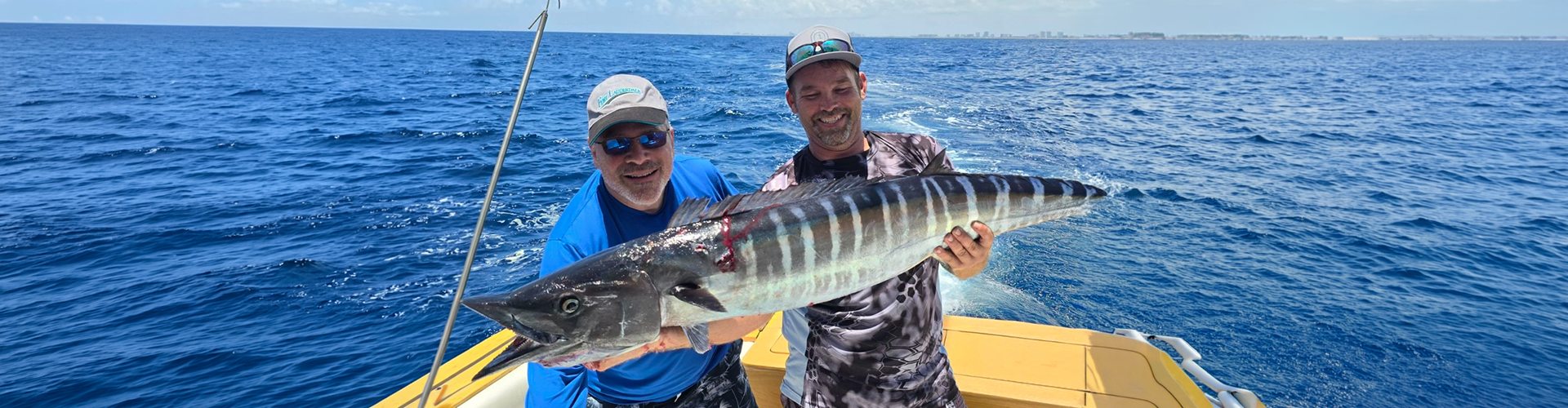
- Wahoo: Fast, sharp-toothed, and demanding quick reflexes and strong gear.
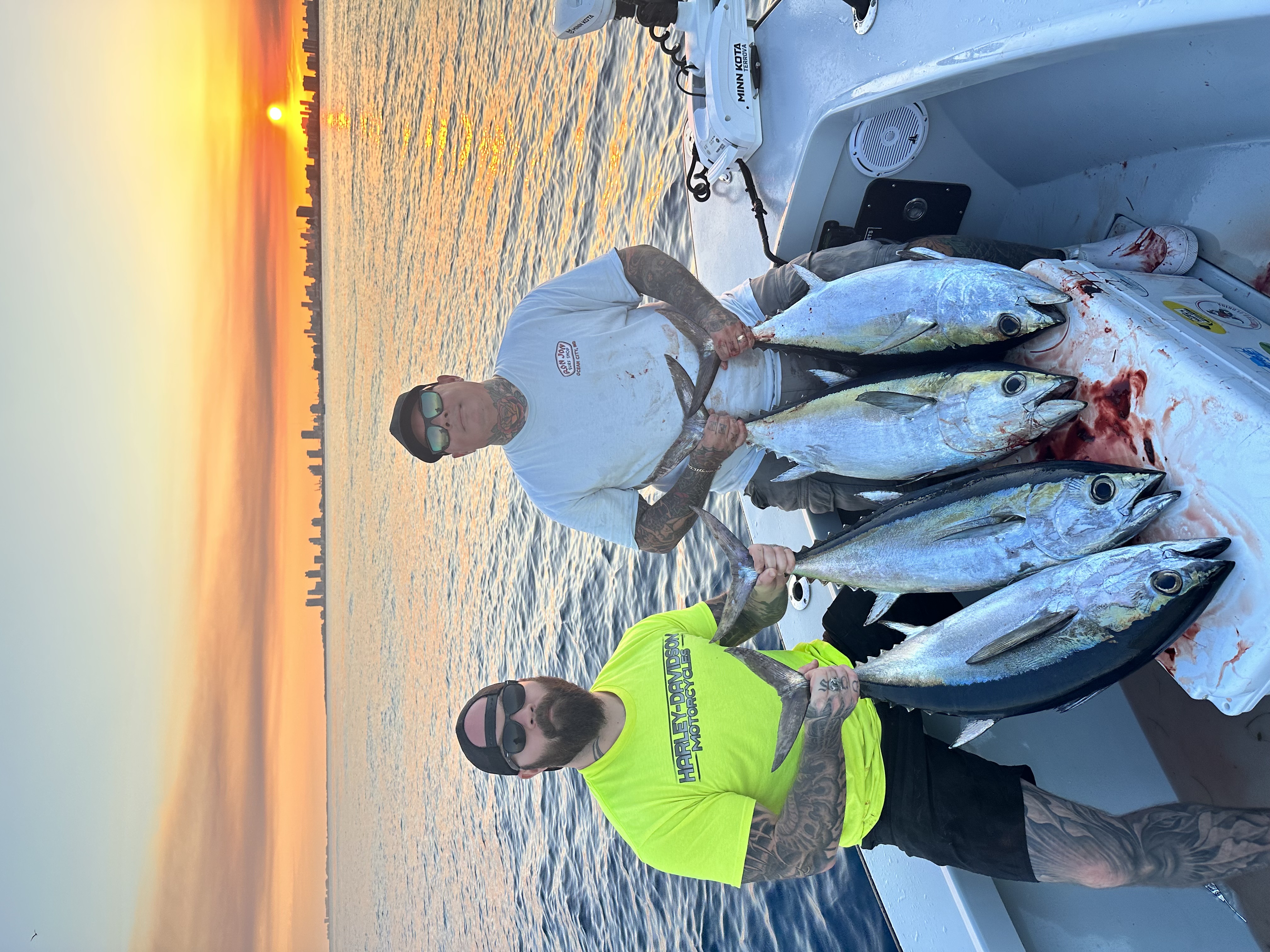
- Blackfin and Yellowfin Tuna: Hard-hitting, schooling fish that test both angler and tackle.
- King Mackerel: Show up along the edge and near structure, especially when the water cools down.
- Swordfish: Deep drop targets, usually at night or early morning, for those looking for a true test.
Each species calls for a different approach. Trolling, live bait, chunking, or deep dropping. The crew shifts tactics based on what’s biting and what you want to catch. If you’ve never battled a sailfish or pulled a mahi from a weed line, this is where it happens.
Why Our Offshore Trips Go Beyond the Reef
While reef trips stick to shallower water and target snapper or grouper, offshore charters break away from the coast and chase bigger game. The gear is heavier, the runs are longer, and the fish pull harder. Covering more distance means burning more fuel, and that’s reflected in the trip cost. But you’re not just paying for time. You’re paying for the range, the equipment, and the experience to find fish in open water. Private offshore charters let you decide how far to go and how long to stay, which makes all the difference when the bite turns on.
How We Handle Weather and Sea Changes
When the wind picks up or the current shifts, plans change. Offshore fishing depends on reading the weather and knowing when to run or when to wait. Calm mornings make for easy runs and steady fishing. Rough days bring bigger swells and a tougher ride. Summer storms can roll in fast, while fall and winter bring steadier conditions but the occasional cold front. Spring often means active fish and stable seas. Around Fort Lauderdale and Pompano Beach, conditions can flip quickly, so flexibility is key. If the forecast turns rough, rescheduling keeps everyone safe and comfortable.
Sea state also decides which spots are in play. A hard-running Gulf Stream might keep you closer to the edge, while lighter winds open up the deep drop zones. The captain’s job is to read the water, adjust the plan, and keep the trip productive. You’re never locked into one spot. The plan shifts with the conditions and the bite. Storm damage cleanup is a constant need across properties in Broward County after major weather events, and the same local knowledge helps us adapt quickly offshore.
Trip Durations and What They Mean for Your Day
With offshore charters, trip length shapes the experience. Some anglers want a quick shot at the edge, others want a full day chasing the Gulf Stream or deep drop targets. Fuel range sets the outer limit. Bigger boats with more capacity can run farther and stay out longer.
- Half-Day Trips: Four to five hours, perfect for working the edge and nearshore offshore zones.
- Three-Quarter Day Trips: Six to seven hours, giving time to reach deeper water and fish multiple spots.
- Full-Day Trips: Eight to ten hours, opening up the Gulf Stream and distant wrecks.
- Extended Trips: Twelve hours or more for anglers chasing swordfish or covering serious distance.
Ask about fuel range and trip length before you book. If you want to fish the Stream, plan for a longer day. For action closer to shore, a half-day can deliver. The right trip matches your goals and the season’s best bite.
What We Recommend You Bring
When you’re offshore for hours, the right gear keeps you comfortable and focused. Sun, salt, and motion all take a toll, so a little preparation goes a long way.
- Sunscreen and Lip Balm: Frequent reapplication protects skin and lips from relentless sun exposure.
- Polarized Sunglasses: Reduce glare and help spot fish below the surface.
- Hat with a Brim: Shields your face and neck during long stretches on deck.
- Light Long-Sleeve Shirt: Offers better sun protection and stays cooler than bare skin.
- Non-Slip Shoes: Wet decks get slick, so shoes with grip keep you steady.
- Snacks and Drinks: Bring enough to stay hydrated and energized throughout the trip.
- Seasickness Medication: Take it before leaving the dock if you’re prone to motion sickness.
Most boats supply coolers, ice, and bottled water. Some offer shade, a head, and a freshwater sink. Check ahead so you know what’s provided. For families, extra snacks and something to keep kids busy between bites make the day smoother. Don’t Panic Sportfishing stocks the essentials, but personal comfort items are up to you.
Let's Get You on the Water
Offshore fishing delivers the kind of action you can't find closer to shore. Bigger fish, deeper water, and the excitement of not knowing what's going to hit next. Whether you're after sailfish, mahi, or tuna, the Atlantic off Broward County has it all. Call Don't Panic Sportfishing - South Florida Boat Charter at 954-263-4648 or book now to lock in your trip.