
By using our website, you agree to the use of cookies as described in our Cookie Policy
South Florida Sportfishing Charter Tips & Info
Our blog shares practical tips and local insights for anyone planning a fishing charter, sunset cruise, or sandbar trip in South Florida. From what to pack to seasonal fishing advice, each post is written to help you get the most out of your time on the water with Don’t Panic Sportfishing – South Florida Boat Charter. Ready to get out on the water? Call 954-263-4648 or book now to reserve your trip.
Can a Private Fishing Charter in South Florida Handle Rough Water?
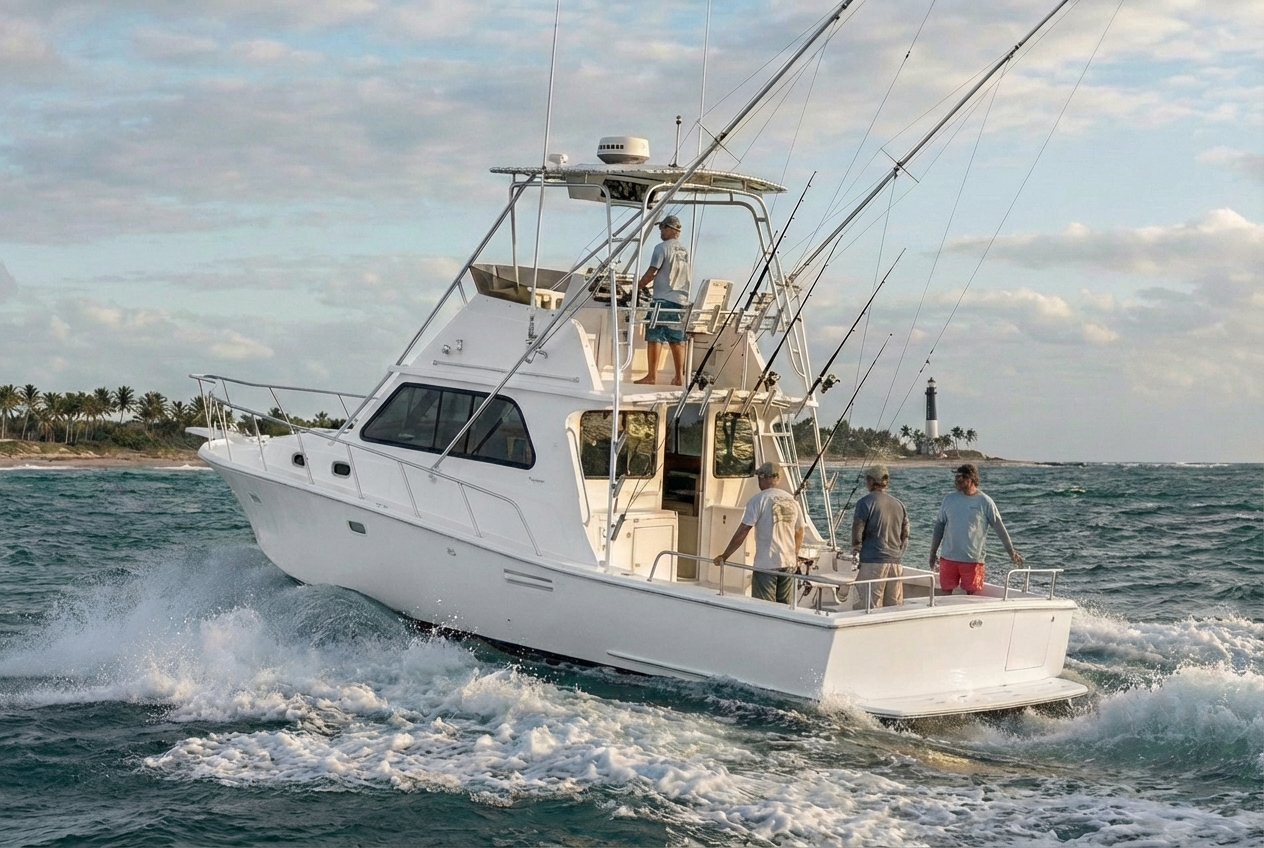
Most anglers think booking a charter is just about finding fish. Cast a line, reel something in, call it a day. But the ocean doesn't care about your itinerary — and if your captain doesn't respect that, you're in for more than a bumpy ride. South Florida waters can shift from calm to chaotic in minutes. Especially when weather patterns collide or currents decide to throw a tantrum.
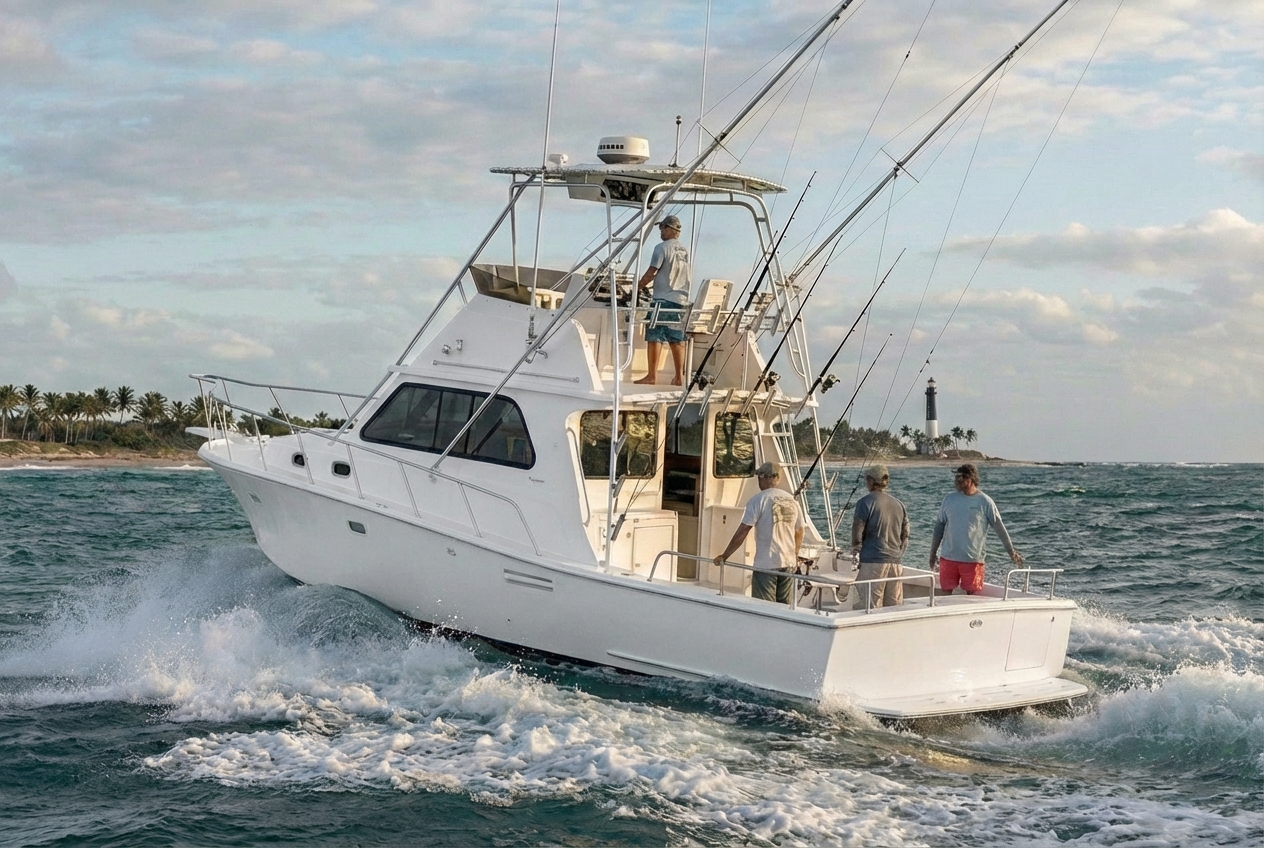
So here's the reality. If you're paying for a private charter to chase trophy fish offshore, that's fantastic. Just don't assume every boat can handle what the Atlantic dishes out. Every vessel should be built for the conditions. Every captain needs real experience. And every decision to head out — or turn back — should be grounded in what the water's doing, not just what the forecast promised at sunrise.
The Ocean Doesn't Follow a Schedule
South Florida's coastline is stunning, no question. But the waters here are anything but predictable. You can wake up to mirror-flat seas and be fighting three-foot swells by noon. The Atlantic is notorious for sudden squalls, shifting winds, and currents that don't show up on any app. That's not a bug — it's the feature of fishing these waters.
Charters operating in this region know the drill. They watch the weather obsessively. They read the water like a second language. And they understand that what looks manageable from shore can turn into a washing machine once you're five miles out. If your captain isn't checking conditions multiple times before departure, that's a red flag.
Boats Built to Take a Beating
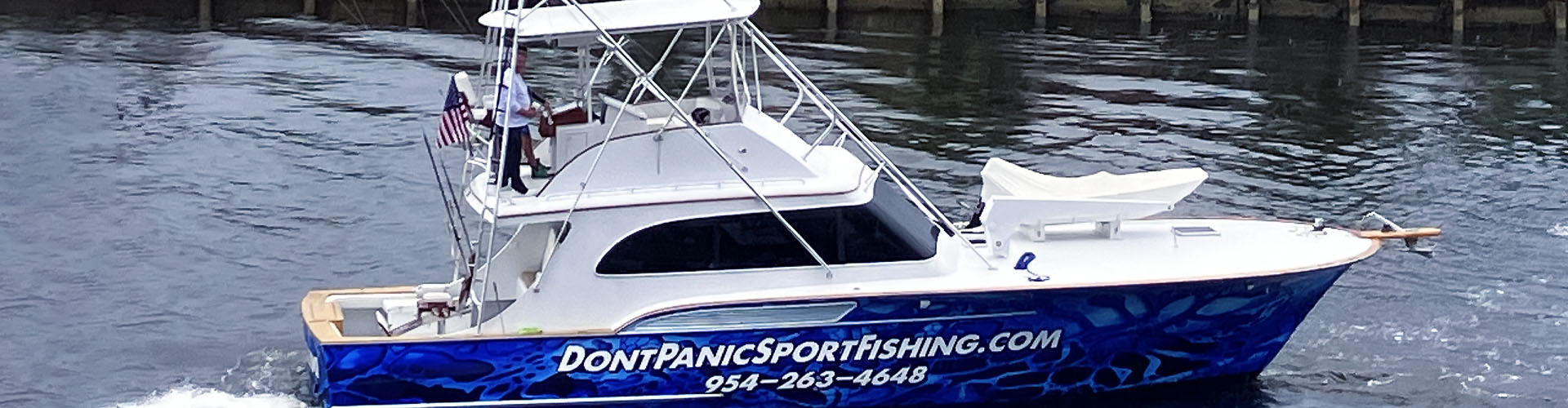
We're not talking about pontoons or bay boats here. Legitimate offshore charters run vessels designed specifically for open water. Deep-V hulls slice through waves instead of slamming into them. Powerful engines keep you moving even when the wind picks up. And modern navigation systems help captains avoid the worst of it before you're in the thick of things.
Safety gear isn't optional either. Life jackets, emergency beacons, marine radios — these aren't decorations. They're standard equipment on any charter worth its salt. The combination of solid construction and up-to-date technology means these boats can handle conditions that would send smaller vessels scrambling back to the dock.
But here's the thing. Even the best-built boat has limits. And the best captains know when to call it. If the seas are building beyond what's safe or comfortable, a reputable operator won't hesitate to reschedule. Your safety isn't negotiable, and neither is theirs.
When the Water Gets Too Wild
Most private charters operate comfortably in seas up to three or four feet. That can feel bouncy, especially if you're new to offshore fishing, but it's well within the boat's capabilities. Once waves start pushing past that mark, or if storms are brewing nearby, captains start weighing their options. Sometimes that means staying closer to shore. Other times it means postponing altogether.
"Rough" is subjective. What feels like a roller coaster to a first-timer might be just another Tuesday for a seasoned crew. But if you're prone to seasickness or you've got concerns about choppy conditions, speak up before you book. A good charter operator will steer you toward calmer windows or suggest alternative locations that offer more protection from the swell.
What Happens When You're Out There Anyway
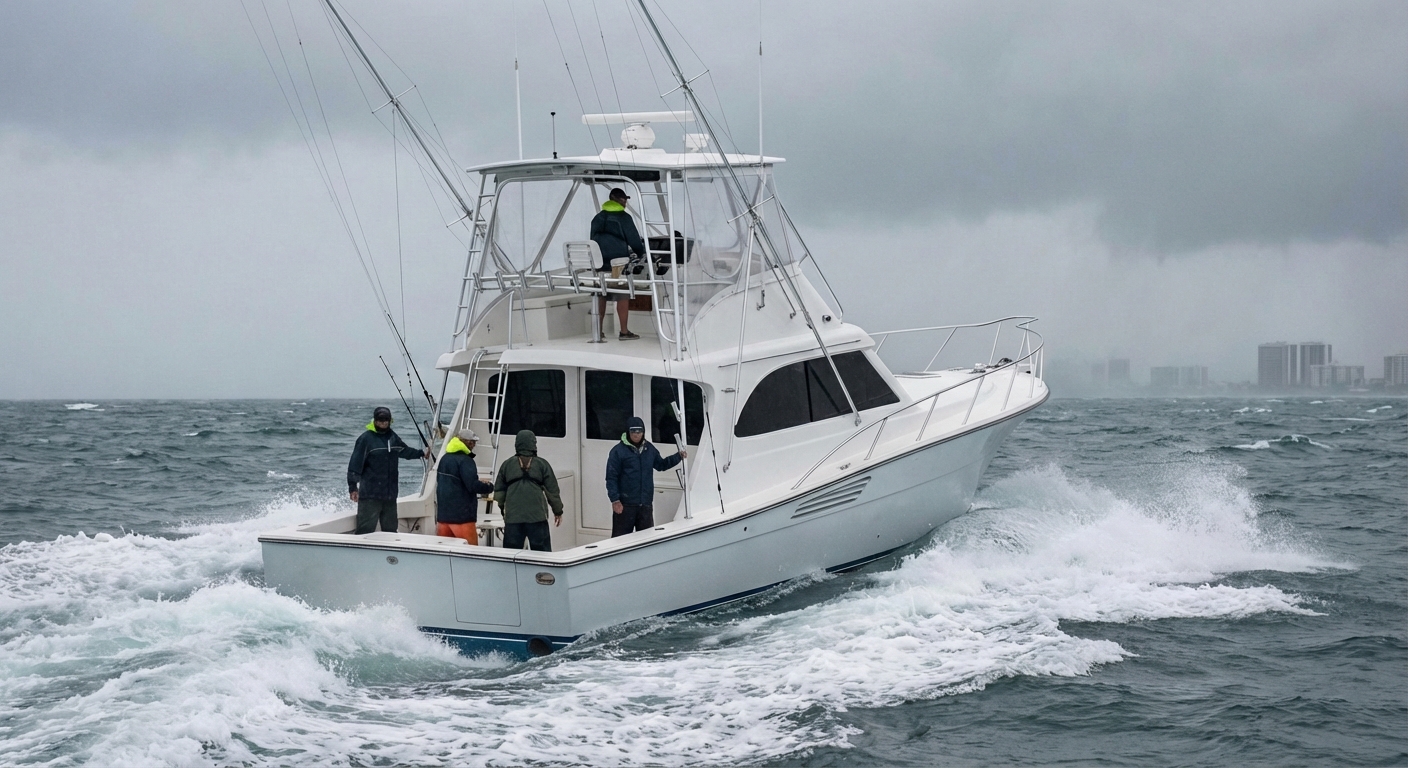
If you end up on the water during less-than-perfect conditions, preparation makes all the difference. Dress in layers and bring rain gear if there's even a hint of weather in the forecast. Non-slip shoes are non-negotiable — wet decks turn into ice rinks fast. And when the crew tells you to sit down or hold on, do it. They're not being dramatic.
Interestingly, some of the best fishing happens when the water's a little stirred up. Certain species get more active when conditions aren't pristine, and fewer boats on the water means less competition for prime spots. That said, if the motion becomes too much, let the crew know. They're there to keep you safe and comfortable, not to prove a point about toughness.
Picking a Charter That Knows the Game
Not every fishing charter operates at the same level. When you're booking a private trip in South Florida, look for operators with experienced captains, well-maintained boats, and reviews that mention safety and professionalism. Ask about their rough-weather policies upfront. How do they handle cancellations? What's their threshold for calling off a trip?
A solid charter will be transparent about their procedures and won't sugarcoat the risks. They'll also have a track record of making smart calls when conditions deteriorate. If an operator brushes off your questions or acts like rough water is no big deal, keep looking. There are plenty of charters that take this seriously.
Key Factors to Evaluate Before You Book
- Captain's experience level and certifications
- Boat design and maintenance history
- Safety equipment and emergency protocols
- Weather monitoring practices and cancellation policies
- Customer reviews specifically mentioning rough-water trips
What to Bring for Unpredictable Conditions
- Layered clothing that can handle wind and spray
- Waterproof jacket and pants
- Non-slip deck shoes with good ankle support
- Seasickness medication if you're prone to motion sickness
- Sunglasses with a retention strap
Signs Your Charter Takes Safety Seriously
- Multiple weather checks before departure
- Clear communication about sea conditions and expectations
- Willingness to reschedule without penalty if conditions worsen
- Visible safety gear and functioning communication equipment
- Crew briefing on emergency procedures before leaving the dock
Species That Bite Better in Choppy Water
- Mahi-mahi often feed more aggressively when seas are up
- Sailfish can be more active during overcast, breezy conditions
- Kingfish patrol rougher water looking for disoriented baitfish
- Wahoo strike more frequently when the surface is broken up
- Tuna sometimes move closer to shore when offshore conditions deteriorate
Questions to Ask Before You Commit
- What's your policy if weather turns bad after we've departed?
- How do you monitor conditions throughout the trip?
- What's the largest sea state you're comfortable operating in?
- Do you offer partial refunds or rescheduling for weather cancellations?
- What safety certifications do you and your crew hold?
Respect the Water, Trust the Crew
Heading offshore isn't the hard part. Knowing when to go — and when to stay put — that's where inexperienced operators get themselves and their clients into trouble. There's no excuse for ignoring weather warnings when the signs are there for anyone paying attention. But there's also no substitute for a captain who's logged thousands of hours reading these waters and knows exactly what the boat can handle.
The best charters don't just get you to the fish. They get you there safely, bring you back in one piece, and make sure you understand what's happening every step of the way. If you're planning a trip and the forecast looks iffy, don't gamble on an operator who downplays the risks. Find one who respects the ocean as much as you do — and who won't hesitate to make the call that keeps everyone safe, even if it means waiting for a better day. For those looking to book a charter, choosing an experienced operator makes all the difference. You can also explore available charter services to find the right fit for your needs.
Ready for a Safe, Unforgettable Day on the Water?
We know how important it is to feel confident before heading offshore, especially when South Florida’s weather can change in a heartbeat. Let’s make sure your next fishing adventure is both thrilling and safe. If you have questions or want to book with a crew that puts your safety first, give us a call at 954-263-4648 or contact us today to get started.
‹ Back