By Don't Panic Sportfishing General
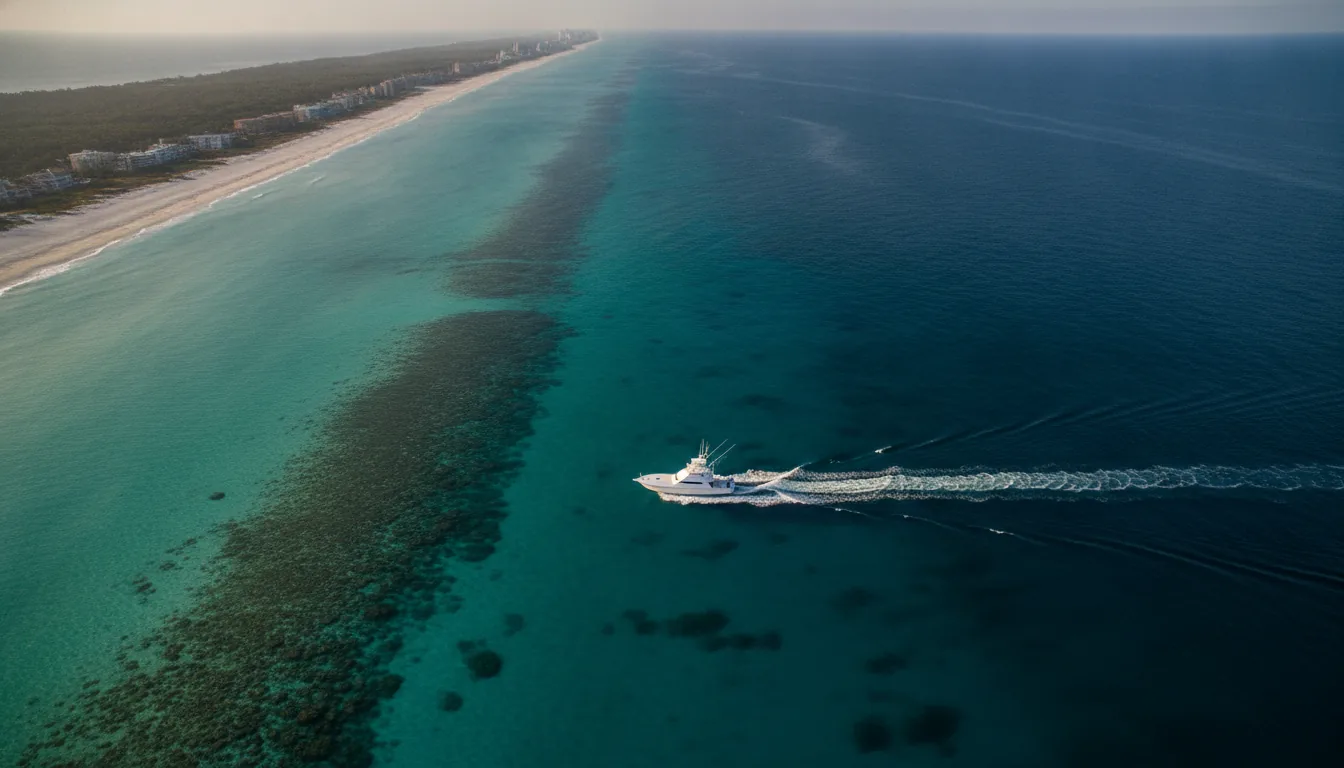
It is the first question most people ask, and it is a fair one. Before anyone books a boat, they want to picture the water they will be fishing. Out of Pompano Beach, the honest answer is that our charters work a band of ocean roughly 1 to 5 miles offshore of Hillsboro Inlet.
That band is not one piece of water. It stacks up in layers, and each layer holds different fish for different reasons. The reef line sits closest, the wrecks sit beyond it, and past both of those the bottom falls away into the blue.
So the real answer is a range rather than a number. Where you land inside that range gets decided on the morning of your trip, by the ocean and by what you came to catch.
What follows is a walk outward from the beach. First what lives at each distance, then the things that decide how far we go on a given day.
The Near Reef Line, Closest to the Beach
The inshore reef line is the first productive water in front of the inlet. It runs roughly parallel to the beach and holds snapper, grouper, barracuda and the occasional cobia working the edges. Bottom fishing here is steady work with real rod bending, which is why a lot of trips start or finish on it.
This is also the most forgiving water we fish. The reef still produces when the ocean further out has gone sloppy, and in winter that happens more often than visitors expect. Families with small kids frequently spend most of a charter right here and come back with a full cooler.
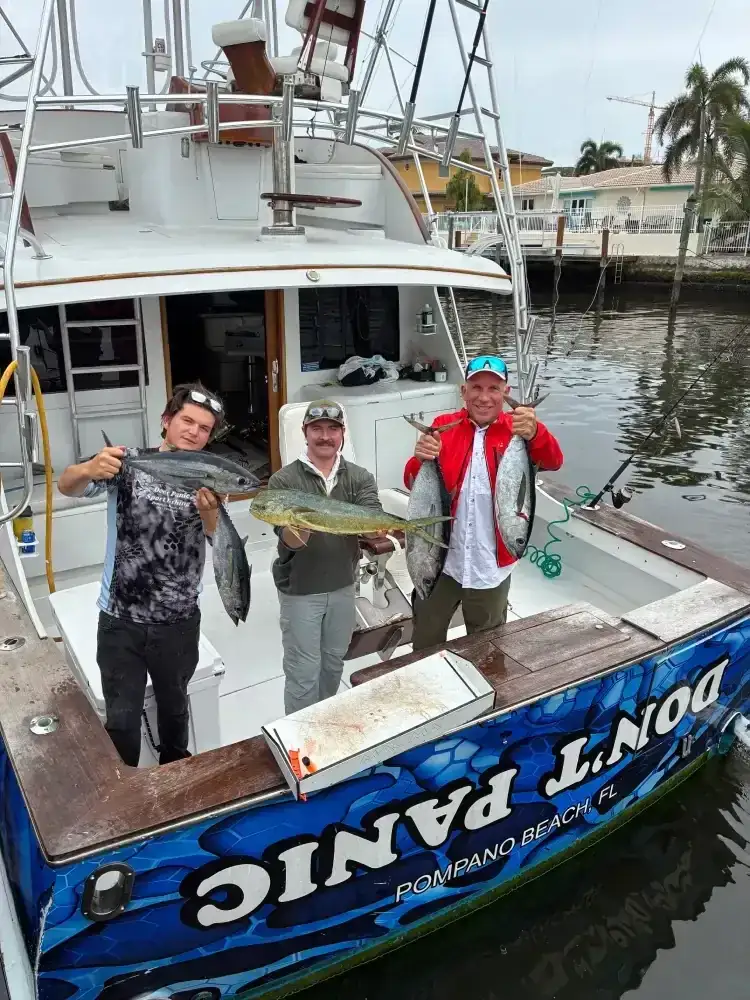
The dock sits at Hillsboro Inlet, so fishing out of Pompano Beach means this reef is the first thing in front of the bow. Capt. Ron works it year round. It rarely goes completely dead, even on days when nothing else is cooperating.
The tradeoff is that the inshore reef is not where the big pelagic fish live. You can pick up a kingfish or a bonito racing through, but sailfish and wahoo are a different conversation and a different piece of ocean.
The Wrecks and the Deeper Structure
Keep heading out and the bottom drops, the current picks up, and the structure changes character. Broward County has spent decades building artificial reefs by sinking vessels and placing material on otherwise bare bottom. Those wrecks sit in the middle of our range and they hold fish for a simple reason.
There is nothing else out there. On a flat stretch of sand, a single piece of structure becomes the only address in the neighborhood, so everything stacks on it. Bait collects first, then the predators show up to work the bait.
Wrecks are where kingfish, heavier grouper and big barracuda tend to appear, with bonito and skipjack tuna tearing through the water column above them. Cobia will cruise a wreck too, often riding high in the water column where you can spot them. A deep sea charter targeting offshore structure almost always touches this zone at some point.
Think of the wrecks as the bridge between bottom fishing and blue water. You can anchor or drift one, then pull trolling lines across the deeper edges on either side of it.
The Gulf Stream Edge and the Deep Drop-Off
Further out again and the bottom falls away hard. This is the outer part of the range, out toward 5 miles, where the Gulf Stream pushes north and the water turns a deep blue you can pick out by eye. The color changes, the temperature changes, and the fish change with it.
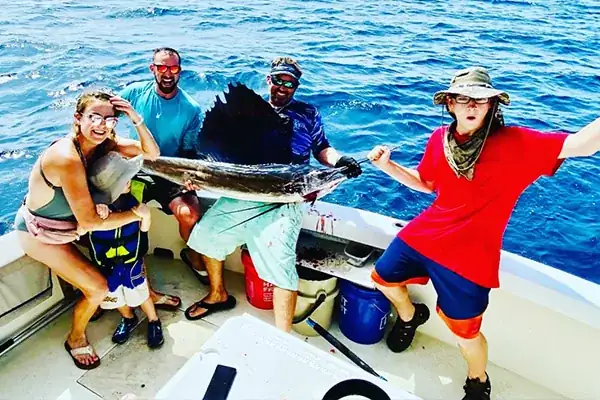
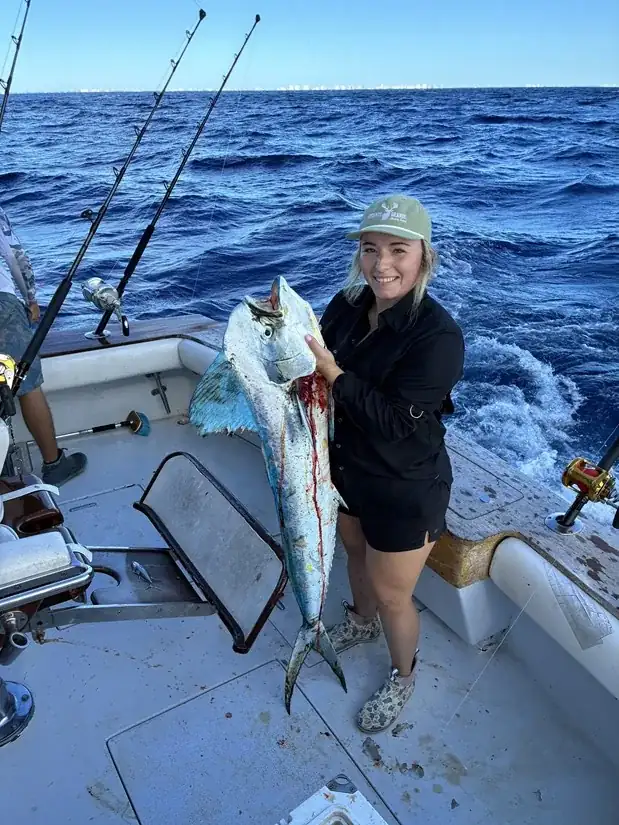
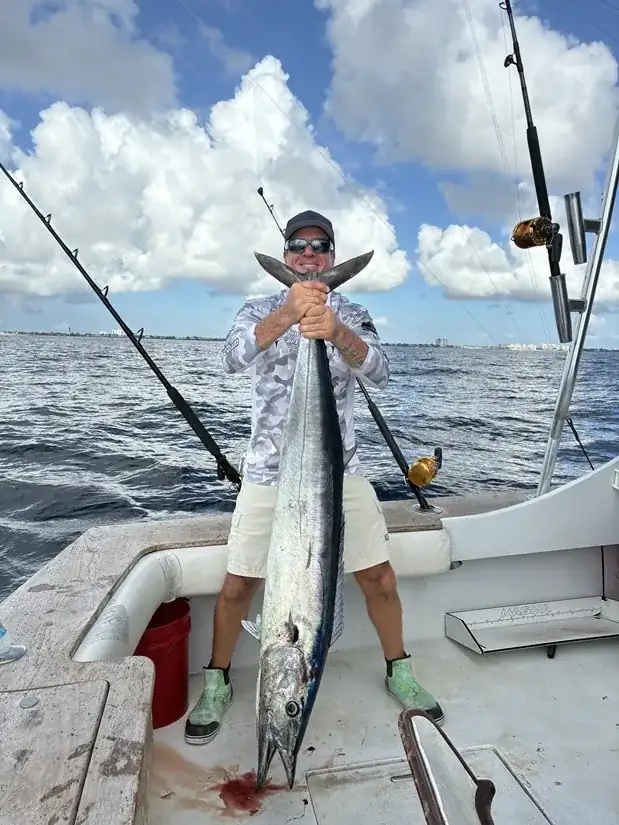
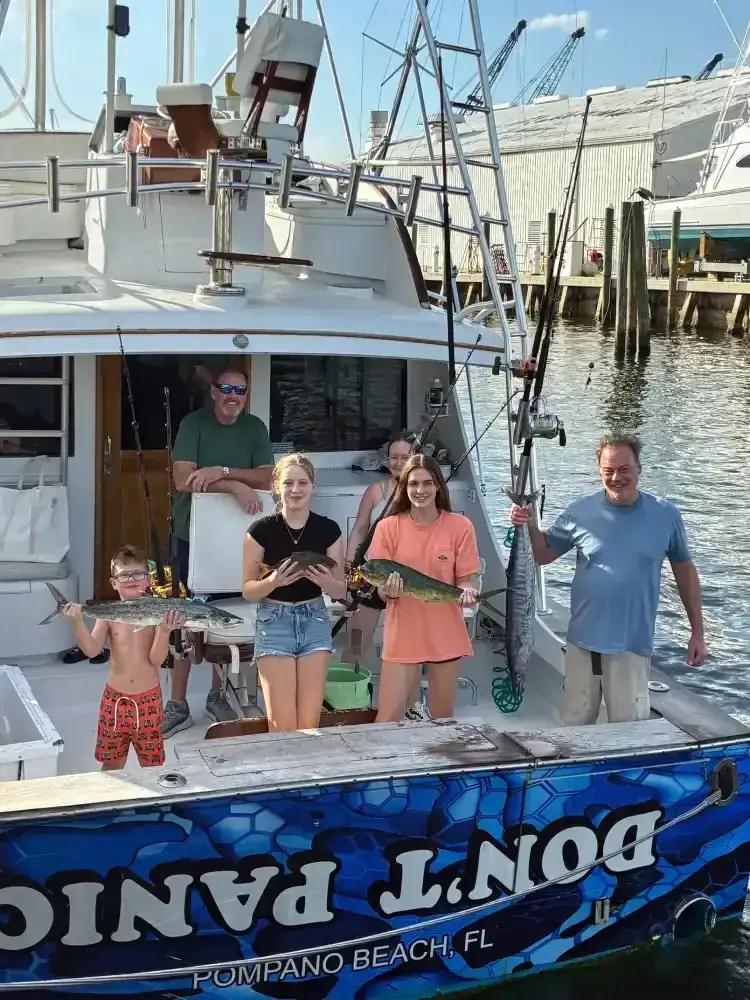
This is pelagic water, and pelagic fish do not sit still. Sailfish, wahoo, blackfin tuna, skipjack tuna and mahi-mahi all live out here, moving with bait and current instead of holding on structure. Kites, trolled baits and live bait on the drift all come into play depending on what is showing.
Weed lines, color changes and current rips form along this edge and concentrate everything into a narrow strip. Mahi-mahi fishing off South Florida lives and dies on finding floating grass, scattered debris or a frigate bird working above bait. Capt. Ron reads that edge on every trip out.
This is the water people have in mind when they say they want to go offshore. It is also the water the ocean takes away first when the wind turns, which is the part nobody mentions.
Why Blue Water Sits So Close to Pompano Beach
Here is the part most visitors have no idea about. The continental shelf is unusually narrow off this stretch of the Florida coast, so the drop into genuinely deep water happens close to the beach. That is geography, not marketing.
Compare it with the Gulf coast, where boats cross a wide shallow shelf before the bottom starts to mean anything. Or the Carolinas, where the shelf runs a long way out before blue water begins. The deep edge sits closer here than almost anywhere else on the Florida coast.
That single fact shapes everything about how we fish. It is the reason sailfish get caught within sight of the condominium towers on the beach. It is also the reason a four hour trip can reach pelagic water at all, instead of being limited to bottom fishing.
Anglers who have fished elsewhere usually notice it. The ocean does the hard part for us here, and the fishery that results is unusually varied for one stretch of coastline.
Season Changes the Answer as Much as Distance
Distance is only half the picture, because the fish move toward the beach and away from it across the year. Winter cold fronts push sailfish south along this coast, and when the north wind backs off they will stack along the edge in surprisingly close water. Kites go up and the day is spent watching baits.
Spring and early summer swing it the other way. Mahi-mahi and wahoo show on the outer edge as the water warms, weed lines organize, and the better fishing is usually the further run of the two. Blackfin tuna turn up on the deeper structure and around the bait schools.
Snapper and grouper on the reef and the wrecks hold up all year, which is why those spots anchor so many trips. They give the day a floor. If the outer edge is not producing, the reef usually is.
So the right distance in January is not the right distance in July. Capt. Ron fishes this water constantly and books trips around what is happening now, not around a fixed itinerary.
Trip Length Sets Your Outer Limit
How long you book does more to set your range than anything else. A four hour half day charter leaving Pompano Beach runs $850 for up to six guests, with departures at 7:00 AM and 12:00 PM. That is enough to fish the reef, work a wreck and get out to the near edge when conditions allow.
Six hours changes the math. The longer trip gives you room to commit to the Gulf Stream edge, spend real time on a weed line, and still fish structure on the way back toward the inlet. It costs $1,600, and additional hours past that are $200 each.
If sailfish, wahoo or mahi-mahi are the point of the trip, the longer option is the better buy. Pelagic fishing rewards patience out on the edge, and patience is the one thing a shorter charter cannot give you. Plenty of people book the four hour trip and then wish they had the extra water.
If bent rods and a cooler of snapper are the point, the shorter trip is plenty. There is no prize for going further than you needed to.
Wind, Sea State and What Capt. Ron Decides That Morning
The ocean gets a vote, and it votes loudly. A stiff east wind pushing against the north-flowing Gulf Stream stacks up a short, steep chop on the outer edge. That edge turns unpleasant well before it turns unsafe, and unpleasant is enough to ruin a day.
Cold fronts, a hard north wind and a big leftover swell all pull the plan in closer. A slick calm summer morning does the opposite and opens the whole range up. Capt. Ron looks at wind, swell, current and water color the morning of your trip and makes the call from there.
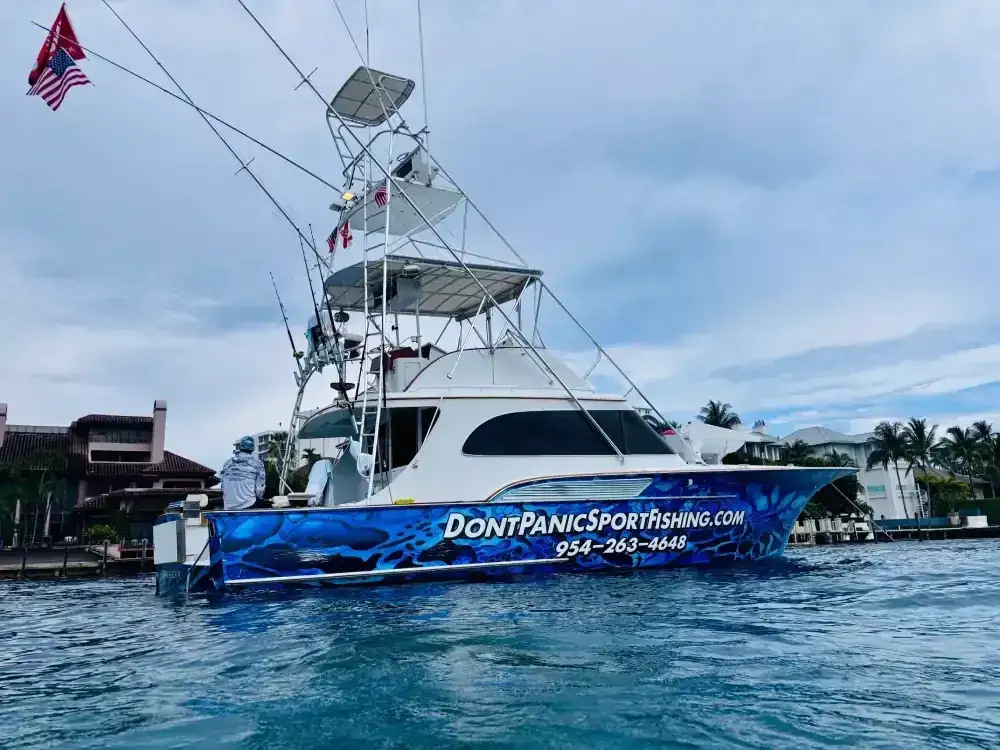
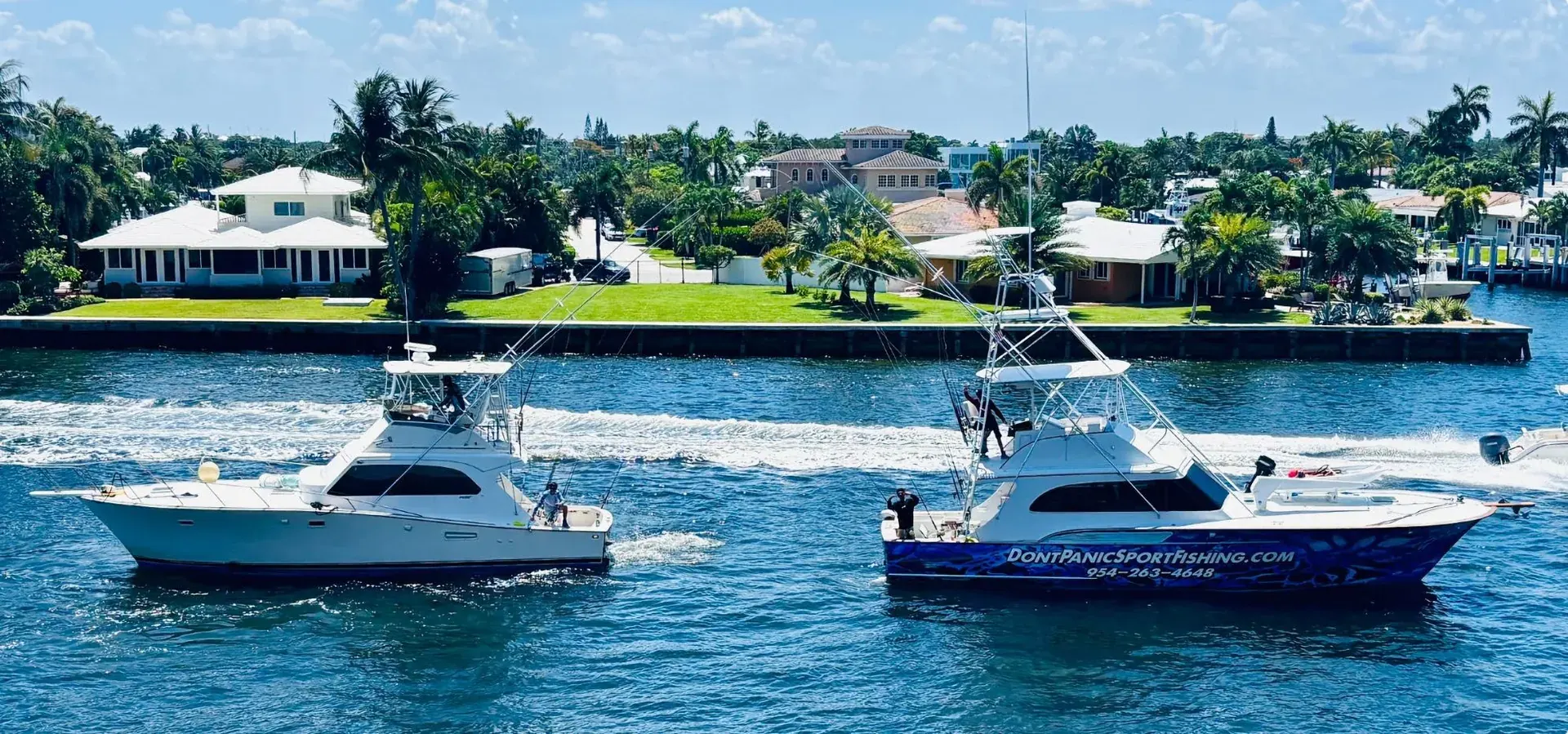
Both of our boats are rigged to fish the outer edge properly, with the electronics and tackle the deeper water asks for. The limit is almost never the boat. It is the sea state, the trip length and the fish you are after.
That is the honest version of the answer. The distance is a decision Capt. Ron makes with you, not a number printed on a brochure.
How Far Do You Want to Run?
Tell Capt. Ron what you want to catch and he will tell you which water fits. If sailfish or mahi-mahi on the Gulf Stream edge is the goal, book the six hour trip and give yourself room to work that edge. If the reef, the wrecks and a cooler of snapper sound better, four hours does the job.
Text us at (954) 263-4648 with your dates and how many are coming. You can also send over your trip details and Capt. Ron will come back with a quote and a plan for the day.
Frequently Asked Questions
How far offshore do your charters fish?
Our charters work the reefs, wrecks and Gulf Stream drop-off roughly 1 to 5 miles offshore of Hillsboro Inlet. Where we end up inside that band depends on the trip length, the sea state and the species you want.
Do I need a full day trip to reach blue water?
No. The shelf is narrow enough here that a four hour trip can reach pelagic water when the ocean cooperates. A six hour full day charter at $1,600 simply gives you more time to work that outer edge once you are there.
What do you catch closer in versus further out?
Closer in it is snapper, grouper, barracuda and cobia on the reef and the wrecks. Out on the Gulf Stream edge you are after sailfish, mahi-mahi, wahoo, blackfin tuna, kingfish, skipjack tuna and bonito.
Can we stay close to shore if someone gets seasick?
Yes, and plenty of trips never leave the inshore reef line. It is the calmer option and it still fishes well, so tell Capt. Ron when you book and he will plan the day around it.
Does rough weather mean the trip gets canceled?
Usually not. The answer on most marginal days is fishing closer in rather than canceling, since the reef and wrecks produce in conditions that make the outer edge miserable. Capt. Ron will tell you straight if the ocean is not fishable.